If you rely on a private well, a laboratory report showing “total coliform: present” or “E. coli: present” is not something to set aside. These are among the most common results owners ask about, and the two terms mean different things. Understanding the difference helps you decide what to do next and how urgently.
This article explains what each result indicates, why bacteria get into wells, and the follow-up steps described in New Jersey Department of Health guidance for private well owners.
Key point: Total coliform is an indicator that a pathway for contamination may exist. E. coli indicates fecal contamination. New Jersey health guidance recommends retesting a total coliform positive within a week and again six months later, and finding and correcting the source after recurring coliform or any E. coli positive.
What coliform bacteria are
Coliforms are a large group of bacteria found naturally in soil, on plants and in surface water. Most total coliform bacteria are not harmful themselves. They are used as an indicator: if they are in well water, something may be allowing surface material or other contamination to reach the water supply.
E. coli is a specific member of the coliform group that lives in the intestines of people and warm-blooded animals. Finding E. coli in well water indicates that fecal material has reached the water, which means disease-causing organisms may also be present.
| Result | What it generally indicates |
|---|---|
| Total coliform absent, E. coli absent | No coliform bacteria detected in that sample at the time it was collected. |
| Total coliform present, E. coli absent | A pathway for contamination may exist, such as a well defect or surface water influence. Follow-up testing is recommended. |
| Total coliform present, E. coli present | Fecal contamination is indicated. The source should be found and corrected, and many households stop drinking untreated water in the meantime. |
Some laboratories report bacteria as present or absent. Others report a count, such as colonies or most probable number per 100 milliliters. Your report will state the method and units used.
Why bacteria get into private wells
New Jersey Department of Health materials describe several common contributors:
- Well construction problems – a cracked or damaged casing, a loose or unsealed well cap, or poor construction.
- Location – a wellhead in a low spot where surface water collects.
- Surface runoff – water carrying contamination from nearby septic systems, agricultural areas or wildlife habitat.
- Treatment system issues – a treatment unit that is failing or not maintained.
Heavy rain and flooding can also change results temporarily, which is one reason a single result is followed by retesting.
Health effects
Harmful bacteria in drinking water can cause stomach and intestinal illness, including nausea, vomiting, cramps and diarrhea, according to New Jersey Department of Health guidance. Infants, older adults and people with weakened immune systems may be more vulnerable. If anyone in the household is ill, contact a medical provider. A water test does not diagnose illness, and illness can have many causes.
What New Jersey guidance recommends after a positive result
Total coliform positive, E. coli negative
New Jersey Department of Health guidance recommends retesting within a week, then again six months later. A single positive can result from a temporary event or a sampling issue, so the follow-up samples help show whether the problem is ongoing.
Recurring total coliform, or any E. coli positive
The same guidance says the source should be found and corrected, for example by removing surface contamination or repairing well construction defects, or that treatment should be installed. A qualified well professional may be needed to evaluate the well.
Interim measures
The guidance notes that boiling water for at least one minute kills bacteria but is not practical as a long-term solution. Treatment options it describes include ultraviolet light and ozone systems, which must be maintained according to the manufacturer’s instructions. Shock chlorination is described as generally suitable for one-time events, such as flooding, and as work for a professional. Your local health department can advise on your specific situation.
Peak Environmental of NJ does not sell treatment equipment, disinfect wells or repair wells or plumbing. Our role is sample collection and coordinating laboratory analysis so you have documented results to share with the professionals you choose.
Getting a reliable sample
Bacteria results are sensitive to how the sample is collected. A contaminated bottle or faucet can produce a positive that does not reflect the well. Good practice generally includes:
- Using the sterile bottle supplied by the laboratory and not rinsing it.
- Choosing a cold-water tap without an aerator, filter or swivel attachment, where possible.
- Running the water before filling so the sample represents the well, not water sitting in the pipes.
- Avoiding touching the inside of the cap or bottle.
- Keeping the sample cool and delivering it within the laboratory’s holding time, which is short for bacteria.
- Recording whether the sample was taken before or after any treatment equipment.
When a result is positive, a sample collected before treatment and one collected after can help show whether the issue is in the well, the treatment system or the household plumbing.
When to test
New Jersey Department of Health guidance recommends testing private wells for bacteria every year. Owners also commonly test:
- After flooding near the wellhead
- After well work, pump replacement or plumbing changes
- When the water changes in taste, odor or appearance
- After disinfection, to confirm results
- Before buying or selling a home served by a well
- When a new baby, older relative or immune-compromised person joins the household
For a broader overview of drinking water testing, see what homeowners should know about drinking water testing.
Reading the rest of your report
Check the sample date and time, the sampling location, the method and the laboratory’s notes. If the report shows a problem with the sample, such as arriving outside the holding time, the result may need to be repeated. Keep copies of every report, so you can see trends over time.
Scheduling bacteria testing
If you would like a well water sample collected, our water testing page explains how we work. Available analyses depend on the laboratory and the package chosen and are confirmed when you schedule. You can book an inspection or call (201) 456-7449. Appointments only.
Frequently asked questions
What is the difference between total coliform and E. coli?
Total coliform is a broad group of bacteria commonly found in soil, plants and water, and is used as an indicator that a pathway for contamination may exist. E. coli is a member of that group associated with human or animal waste, so its presence indicates fecal contamination.
My well tested positive for total coliform but negative for E. coli. What now?
New Jersey Department of Health guidance recommends retesting within a week and again six months later. If total coliform keeps coming back, the source should be found and corrected, which may require a well professional.
What should I do if E. coli is detected?
New Jersey guidance says that any single E. coli positive calls for finding and correcting the source or installing treatment. Many households use an alternate water source or boiled water while the issue is addressed; your local health department can advise on your situation.
Can I tell if my water has bacteria by taste or smell?
No. Coliform bacteria and E. coli have no color, odor or taste, so laboratory testing is the only way to detect them.
How often should a private well be tested for bacteria?
New Jersey Department of Health guidance recommends testing private well water for bacteria every year, and it is also sensible to test after flooding, well work or a change in water quality.
Does Peak Environmental treat or disinfect wells?
No. Peak Environmental of NJ performs sampling and testing only. We do not sell water treatment equipment, disinfect wells or perform well or plumbing repairs.
Which water tests can Peak Environmental arrange?
Available analyses depend on the laboratory and the package selected, so they are confirmed when you schedule.
Need testing at your property?
Peak Environmental of NJ provides independent inspection and testing only. We collect samples, send them to a laboratory, and explain the results clearly. We do not sell remediation, so our findings are objective.
Related services
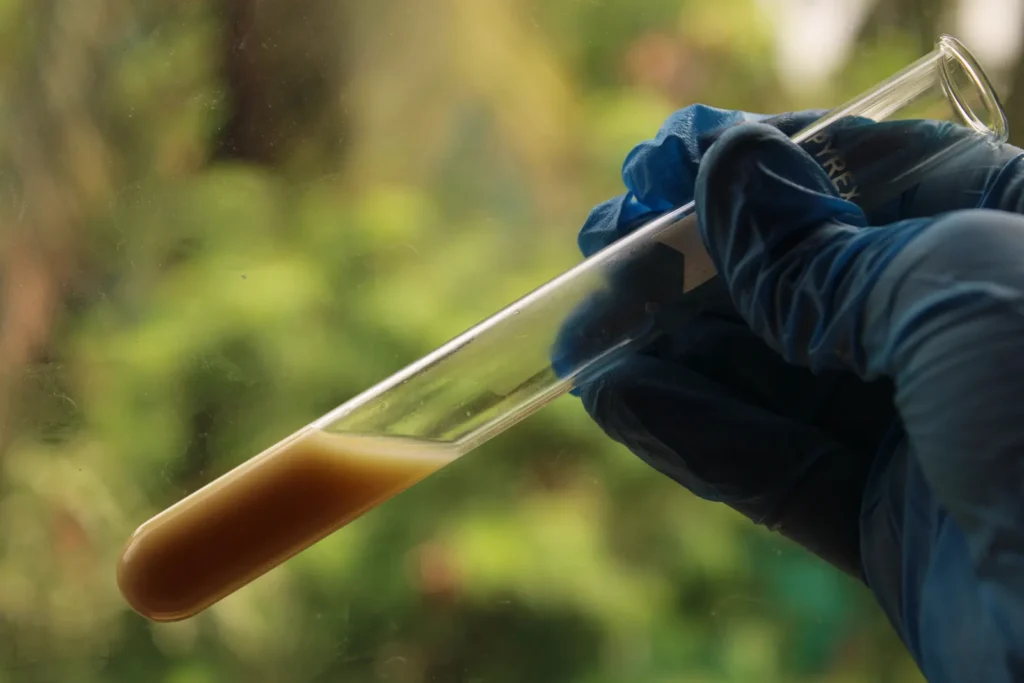
Featured image: illustrative stock photography, not Peak Environmental staff or a specific project. This article is general educational information, not legal, medical, or engineering advice.