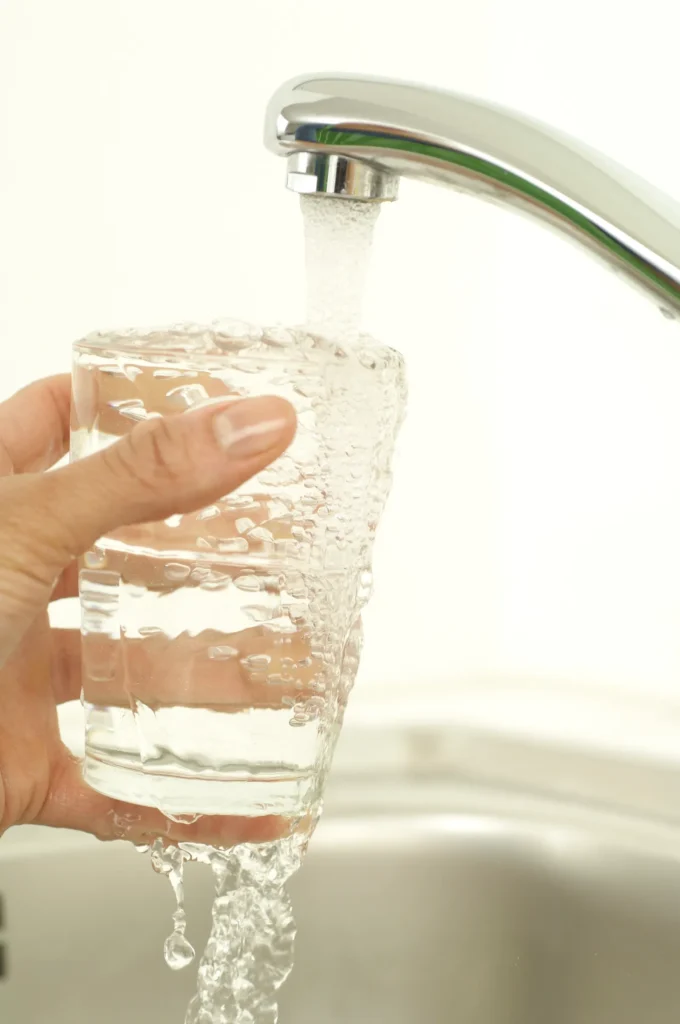
When people talk about testing tap water for lead, they often picture a single bottle filled at the kitchen sink. In practice, when that bottle is filled and how much water runs first change what the sample represents. A sample collected the moment the faucet opens after water has been sitting overnight tells a different story from one collected after the tap has run for a short time.
This article explains why stagnation matters, what first-draw and flushed samples each represent, how the idea of sequential sampling builds on both, and how to avoid common collection mistakes. It focuses on sampling design, not on treatment or plumbing work, which are outside what Peak Environmental of NJ does.
Key point: A first-draw sample shows what may be in water that has been sitting in the faucet and nearby plumbing. A flushed sample shows what comes from farther back in the system. Comparing them helps narrow down where lead may be coming from.
Why stagnation matters
Lead in drinking water typically comes from materials the water touches on its way to the tap, such as lead service lines, lead solder, and some older brass or bronze fixtures and valves. When water sits still in contact with those materials, lead can dissolve or particles can loosen into it. The longer the water sits, the more opportunity there is for that to happen, which is why sampling protocols specify a period with no water use before collection.
The U.S. EPA’s 3Ts guidance for schools and child care facilities calls for samples to be taken after a stagnation period of 8 to 18 hours, before the building opens and before any fixture is used. EPA’s Lead and Copper Rule Improvements for public water systems use a minimum stagnation period of at least six hours for compliance tap samples. A home sampling plan will specify its own conditions; follow the instructions provided with your sample kit or by your inspector.
What a first-draw sample represents
A first-draw sample is collected immediately when the tap is opened after stagnation, without letting any water run to waste first. The EPA’s 3Ts protocol uses a 250 mL first-draw bottle and describes this sample as representative of water that may be consumed at the beginning of the day or after a period of infrequent use.
Because that first small volume has been sitting inside the faucet and the plumbing just behind it, a first-draw result is heavily influenced by:
- the faucet body and internal parts;
- the aerator and any debris it has trapped;
- the supply line and valve under the sink;
- a short run of pipe immediately behind the fixture.
What a flushed sample represents
A flushed sample is collected after water has been allowed to run for a defined time. In the EPA 3Ts two-step protocol, the second 250 mL sample is collected after the tap runs for 30 seconds, and its purpose is to identify lead in the interior plumbing behind the fixture. Because the first water has gone down the drain, the bottle fills with water that was sitting farther back in the building’s pipes.
A flushed sample does not represent the whole system equally. Depending on how long the water runs, the pipe diameters and the distance to the service line, it may reflect interior plumbing, the service connection, or water that has recently arrived from the distribution main.
Comparing the two
The value of collecting both comes from the comparison. The EPA describes the goal of the second step as showing whether lead is coming from the fixture or from interior plumbing, so that follow-up can be targeted. General patterns look like this:
| Pattern | What it may suggest | Typical next question |
|---|---|---|
| First-draw elevated, flushed much lower | Lead source near the tap: faucet, aerator debris, valve or supply line | Is the fixture or a component near it contributing? |
| Both elevated | Possible contribution from interior plumbing or the service line as well as the fixture | Would a more detailed sampling profile help locate the source? |
| First-draw low, flushed higher | Lead may be coming from farther back in the system | Does the building have older pipe, solder or a lead service line? |
| Both low | Low lead at the time and conditions sampled | Do results stay consistent at other taps or times? |
These are starting points for discussion, not diagnoses. Lead release can vary from day to day, and particles can make results inconsistent, so a single pair of samples is a snapshot.
The sequential sampling concept
Sequential sampling extends the same idea. Instead of two bottles, several consecutive bottles are filled one after another from the same tap after stagnation, without pausing between them. Each bottle holds water that was sitting in a successively more distant section of plumbing. Plotted in order, the results form a rough profile from the faucet back toward the service line.
Utilities use a version of this idea for compliance. Under EPA’s Lead and Copper Rule Improvements, at sites with lead service lines, water systems collect a first-liter sample and a fifth-liter sample at the same time, and the higher of the two results is used. The fifth liter is intended to capture water that has been sitting closer to or in the service line, which a first-liter sample alone may miss.
For a homeowner, sequential sampling can be useful when first-draw and flushed results are both elevated and the source is unclear. Whether it is offered, and how many bottles are used, depends on the laboratory and package and is confirmed when scheduling.
Collection mistakes that change results
EPA guidance highlights several practices that can make results artificially low or high:
- Removing or cleaning the aerator before sampling. Debris held in the aerator can contain lead. Leave it in place unless instructed otherwise.
- Running water before the first-draw sample. Pre-flushing removes the stagnant water the sample is meant to capture and can lead to artificially low results.
- Closing shut-off valves before sampling. Operating valves can knock loose scale and give artificially high results.
- Using the tap during the stagnation period. Remind everyone in the household, including anyone who might run a dishwasher, ice maker or filter on the same line.
- Changing bottle order. Mark bottles clearly so the first-draw and flushed samples are never swapped.
- Skipping records. Write down the time water was last used, the collection time and the tap location.
Choosing which approach fits your question
- “Is there lead in the water I drink first thing in the morning?” A first-draw sample at the tap used for drinking and cooking answers that most directly.
- “Is the problem the faucet or the pipes?” Paired first-draw and flushed samples help separate the two.
- “Could the service line be involved?” A sequential profile may give more detail.
The EPA has set the maximum contaminant level goal for lead in drinking water at zero, reflecting that there is no known level free of risk. If you have health concerns about lead exposure, talk with your doctor or local health department. If results suggest plumbing or service line changes, that work is done by licensed plumbers or the water utility; Peak does not perform plumbing work or sell treatment systems.
For background on testing more broadly, read what homeowners should know about drinking water testing, and see our water testing page. Available analyses depend on the laboratory and package and are confirmed when scheduling. To set up sampling, book an inspection or call (201) 456-7449.
Frequently asked questions
How long should water sit before a first-draw lead sample?
Follow the instructions for your sampling plan. EPA’s 3Ts guidance for schools uses 8 to 18 hours of stagnation, and EPA’s utility compliance rule uses at least six hours.
Can I run the tap for a few seconds before filling the first bottle?
Not for a first-draw sample. The point is to capture the water that was sitting in the faucet, so the bottle goes under the tap as soon as it is opened.
Should I take the aerator off before sampling?
No, unless your instructions say otherwise. EPA guidance notes that aerator debris can contain lead, and removing it can affect results.
Does a low flushed sample mean my water is fine?
It reflects conditions at that tap and time after flushing. It does not represent water that sits overnight, and it is not a guarantee about future results.
Why do utilities collect a fifth-liter sample?
At sites with lead service lines, the fifth liter is meant to capture water that has been sitting closer to the service line, which the first liter can miss.
Which tap should I sample?
Usually the tap most often used for drinking and cooking, often the kitchen faucet. Your inspector may suggest additional taps depending on your question.
Need testing at your property?
Peak Environmental of NJ provides independent inspection and testing only. We collect samples, send them to a laboratory, and explain the results clearly. We do not sell remediation, so our findings are objective.
Related services
Featured image: illustrative stock photography, not Peak Environmental staff or a specific project. This article is general educational information, not legal, medical, or engineering advice.